
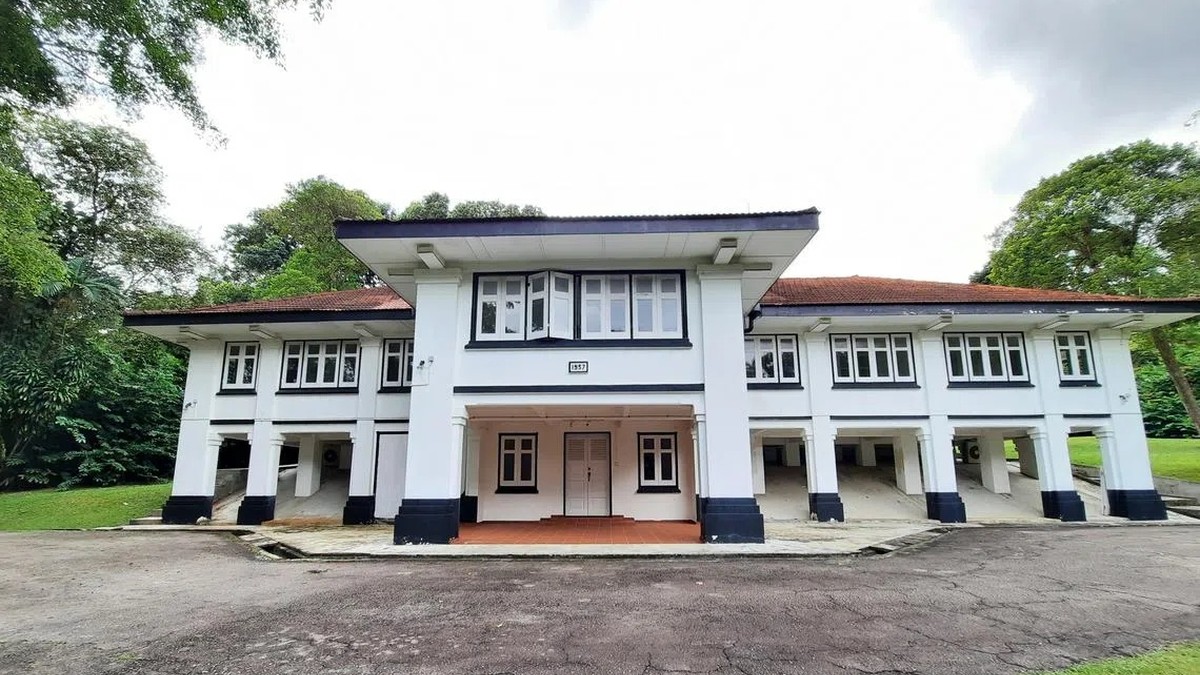
The Black and White houses of Singapore
– A peek into our past
Look at where we are at right now. From the kampong days to the HDB flats in a matter of 50 years. In between this meteoric rise of our standard of living, did we ever considered to peer into our past just before Singapore’s independence? The kampong estates are pretty much understood by many of us, they’re just houses made of wood and simple tools to build. But have we ever wondered about our country’s early roots with the rise and fall of the black and white bungalows?

From the kampong days

To the BTO flat days today
Let’s check out when the famous black and whites sprouted in Singapore, and why they’re a dying breed today.
My first spooky encounter with a Black and White
I first came across my very first black and white when my dad brought us to some inhabited bungalow in the area of Changi, saying that that place was used to kill locals during the Japanese Occupation. Yuppp, my dad was a supernatural enthusiast during our childhood days, and I remember him bringing our cousins and us to places like Onraet Road, Mount Pleasant for ghost hunts. Looooool. Not as if we saw anything. Just creepy places that’s all.
Peeking through the windows of the car, I managed to make out the unique décor of bungalow. Although it was in minor ruins and unkempt state, it did hold some décor ingenuity.
Why were they built and who did?

According to the National archives, these black and white bungalows were built originally to cater to the increasing number of expats in Singapore during the early 1900s. The first black and white of their kind is believed to be built by a man called; Regent Alfred John Bidwell- who had a hand(literally lol) in the building of our Raffles Hotel and the Victoria Concert Hall. It suddenly occurs to me that hey, There really is a stark resemblance between the design of Raffles Hotel and the remaining black and white bungalows here in Singapore!
Hearsay that, a trend erupted after the first few black and whites were built- with the famous one being the W.Pachitt house along at Cluny Road. The trend took flight even further during the emergence of World War 2, when there was an increase of Europeans, mostly military personnel coming to the defense of Singapore.
The unique design of the black and whites

Dark timber beams and whitewashed walls. Interior living rooms with sky high ceilings to help regulate the air.These were the common traits of the black and whites favored by the expats because…. they’re not used to our tropical climate!! So Regent Alfred designed the bungalows in such a way that the occupants can have air to breathe…. And mind you, there was no AC in those day eh.
Are there any remaining bungalows now?

Indeed there are. But there’s just under 500 of them in total now, a majority of them owned by the government being leased out to visiting expats, and some being used as offices or turned into restaurants or bars. Personally I know of a few in the areas of Linden Drive, Ridley Park, all mostly in the prime estates of Singapore like Bukit Timah.
Looking to experience being in one?
Sure, if you have $16,800 for its monthly rental. I’ll gladly link it here, and ohhh, if you ever do live in one, do let us know please? We’d LOVE a tour.
For the other folks like us who can’t afford $16,000 a month. But can afford maybe $12.80 for a Grande Caramel Frappucino. No sweat. We have good news.
Located at Rochester Park. Starbucks has a finger in almost every real estate in Singapore. Tag us if you guys ever visit the black and white in Singapore at #TLRB or #TheLittleRedBlog
We hoped that you enjoyed our little article, and if you wish to be updated more about Singapore past, present and future events, do sign up for our weekly newsletter below!

More…
